Welcome to zee scientific works!
The organisation and contents of laboratories are determined by the differing requirements of the specialists working within. A physics laboratory might contain a particle accelerator or vacuum chamber, while a metallurgy laboratory could have apparatus for casting or refining metals or for testing their strength. A chemist or biologist might use a wet laboratory, while a psychologist’s laboratory might be a room with one-way mirrors and hidden cameras in which to observe behavior. In some laboratories, such as those commonly used by computer scientists, computers (sometimes supercomputers) are used for either simulations or the analysis of data. Scientists in other fields will still use other types of laboratories. Engineers use laboratories as well to design, build, and test technological devices.
Scientific laboratories can be found as research room and learning spaces in schools and universities, industry, government, or military facilities, and even aboard ships and spacecraft.

Despite the underlying notion of the lab as a confined space for experts,[2] the term “laboratory” is also increasingly applied to workshop spaces such as Living Labs, Fab Labs, or Hackerspaces, in which people meet to work on societal problems or make prototypes, working collaboratively or sharing resources.[3][4][5] This development is inspired by new, participatory approaches to science and innovation and relies on user-centred design methods[6] and concepts like Open innovation or User innovation,.[7][8] One distinctive feature of work in Open Labs is the phenomenon of translation, driven by the different backgrounds and levels of expertise of the people involved.[9]
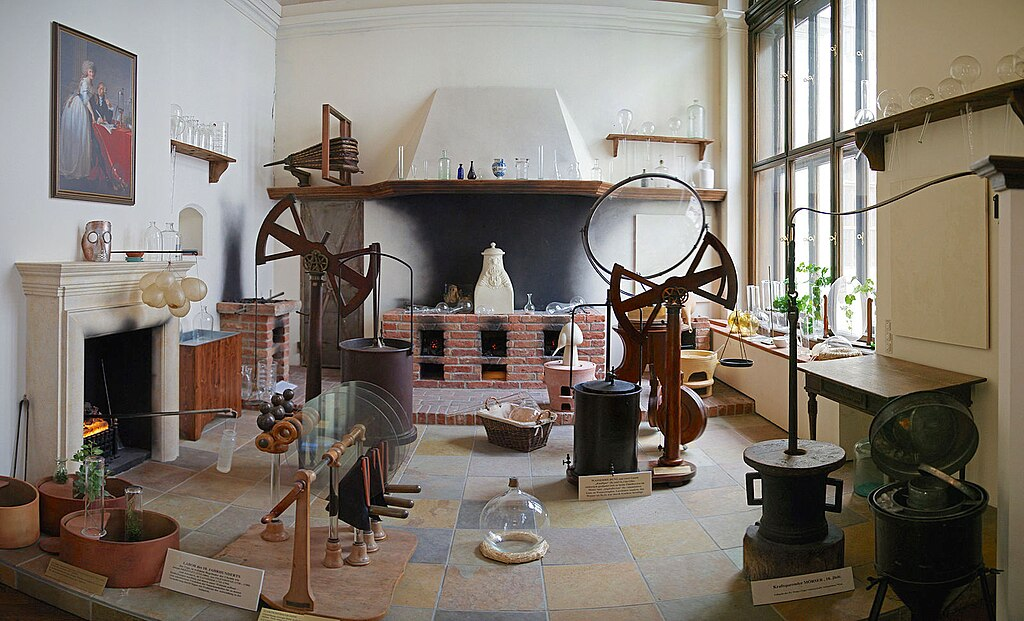
Equipment and supplies
Laboratory equipment refers to the various tools and equipment used by scientists working in a laboratory. Laboratory equipment is generally used to either perform an experiment or to take measurements and gather data. Larger or more sophisticated equipment is generally called a scientific instrument.
The classical equipment includes tools such as Bunsen burners and microscopes as well as specialty equipment such as operant conditioning chambers, spectrophotometers and calorimeters.
Chemical laboratories
- Laboratory glassware such as the beaker or reagent bottle
- Laboratory scissor jack
- Analytical devices, such as:
Hi, this is a comment.
To get started with moderating, editing, and deleting comments, please visit the Comments screen in the dashboard.
Commenter avatars come from Gravatar.